
On Lush Green and Authenticity
Words shine when they stop pretending.

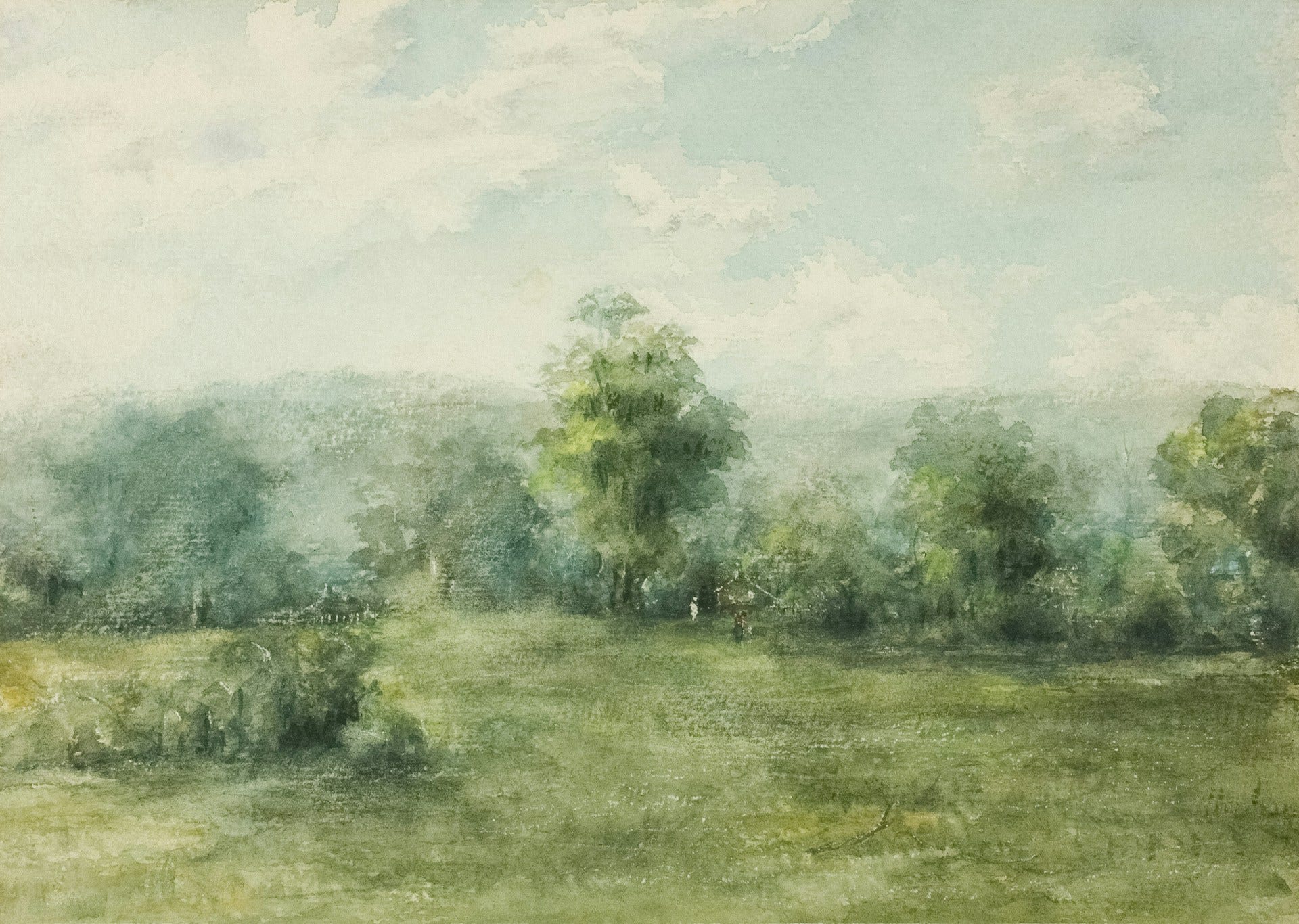
I was going through my old diary, which I had filled with unfinished stories. Nothing special. Just some scenes stuck in my head back then.
In two of the pieces, I had used lush green to describe gardens.
It was stark, the use of the phrase. Ingenuine, almost.
Lush. It reminds me of hair. Silky, luxurious, abundant. The person who came up with the phrase was probably looking at foliage in that way. A canopy of green trees, like hair on the head of a lucky maiden. Or ready-to-harvest crops in vast green fields swaying as one under the sunlight. Or maybe not.
Maybe they liked the sound of the two words together. Lush and green is an interesting combination that should create a vivid picture in the reader’s mind.
But it has become a ready-made descriptor. A standardized metaphor. Too Generic. Like Nestled in the valley of majestic mountains lies a serene lake with crystal-clear waters.
I know it’s a good picture. I see the scene is beautiful. I can imagine it too, but I will not remember it. I have no connection to it, because I have definitely read it before. Almost all landscapes carry a serene lake nestled in the heart of some majestic mountains now.
So, when I read my description of a lush green garden that the protagonist walks through to meet her dreadful in-laws (another lazy phrase?), I could only laugh. I knew that the younger me used the phrase as a cheat code, to make the sentence hefty and impressive.
It pulled me out of the scene instead.
***
Originality is a tough ask. What’s even original anymore when the human experience is the same? How do we discover new phrases and words when we are all working with the same thesaurus?
I struggle with this one a lot.
Sometimes, when I am out of ideas, I delegate the task to ChatGPT. The software scours the web and throws out some pretty decent content for me to work on. Am I cheating? Is this not how writing is supposed to work?
And who checks if I am following these tenets? My work is not being read around the world, in libraries, homes, and colleges. Who wants to read my old school journals? Why is there a need to be original?
But the question isn’t about the originality, but the authenticity of words.
Once, I wrote of ‘mind brimming with emotions, on the verge of overflowing’ while sharing a personal experience. Got a big lecture from an author for it. It stung. I thought the words were mine.
But I had used them because they sounded nice, not because they meant something.
That day I learnt that people can see through them—those shiny adverbs and polished metaphors. And if there is no substance behind them, the writing turns dull and fails to impress anyway.
When I take away the ornaments, authenticity shines. At times, when the authentic self wants to speak in metaphors, I let it. When the lazy self starts hiding behind them, it’s better to pluck those clichés away.
Earlier today, I was thinking about a writer who writes because she doesn’t want some moments, emotions, and information to get lost. I wrote in my journal that lately I have become the person who spends her time casually because nothing appears worth preserving anymore.
I thought a lot about the word spend. It felt dull. Too weak for the sentence. But it perfectly captured the feeling of watching time just slip away, a currency I was casually spending. It felt like I understood the phrase—spending time—for the very first time.
***
Knowing this, there are still times when I want my words to be like peacocks, strutting about in their glory, impressing everyone who reads them. See?
But when I am carrying this desire to be seen, writing for multiple others whose lives I would probably never understand, it turns into a presentation. Suddenly, I am fiddling with the shapes, messing with the paragraph length, straightening out the alignment, rather than actually worrying if my words on paper match the words in my head.
If a crowd is watching, you would want to mince your words and appear as wise as possible. The awkward hand movements, the side profile, the way dry lips get stuck to the upper teeth, every flaw has to be hidden behind grand gestures and false confidence.
That’s when the lush green version comes out.
Yet, when the words are for just one person—even if it’s me—they are simpler. Genuine. Clearer. Somewhat dull too, but more expressive than empty, packaged phrases. Strange how that works. How the preparations fail!
Possibly why those pieces which were never supposed to be published, where green was just green, mountains were just mountains, and words, even though lined with frustrations, had more meaning, more emotions than the polished ones.
It helps when I ask myself—do I want to present an idea or convey an idea? They look the same, but shift something inside the writer. The final piece often feels like me. Like, I am finally finding my voice.
And that is a lush feeling!